
Image failed to load
Personal Details
- Russian Name
- Вадим Андреевич Денисов
- Other Names
- Harvard Case 105
- Birth Date
- 17-Mar
- Defection Date
- Mar-42
- Death Date
- >1980
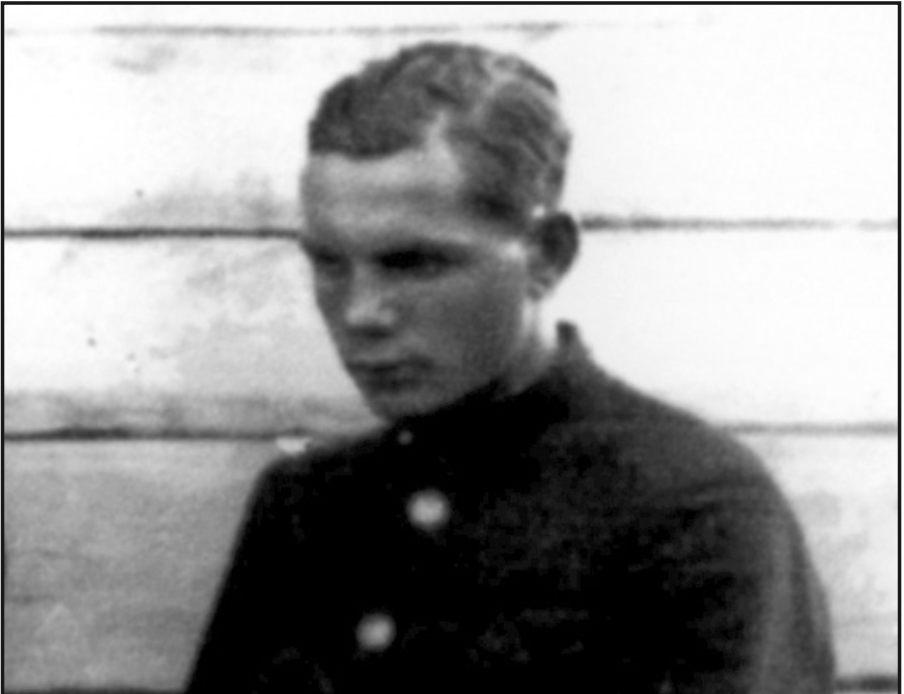
Vadim Andreyevich Denisov
Вадим Андреевич Денисов
Also known as: Harvard Case 105
Service Details
Biography
Vadim Andreyevich Denisov provided information about his NVKD career in several venues. From 1942 to 1945 he supported German intelligence and covert action operations, and eventually affiliated with the KONR. British intelligence interrogated him in 1947, and between 1947 and 1949 he began working with U.S. intelligence in Germany, providing information about Soviet intelligence and state security for use in the Regensburg intelligence school. Denisov wrote a series of monographs in which he described various aspects of Soviet intelligence priorities, methods, and missions. These papers were never published formally, but were intended for use in U.S. intelligence training curriculums.
In late 1950, Denisov was interviewed for the Harvard Project on the Soviet Social System and provided biographical information and his impressions of life in the Soviet Union. An interviewer in the Harvard project questioned Denisov’s truthfulness, stating that his story is either true or a “very carefully fabricated life history, which he has learned so well that he can recite it easily.”[i] His written works include some information that would not naturally have derived from the positions he claimed to have held, as well as information that dates from long after his defection, and it is not always clear where he obtained his information originally. However, when he focuses on the specific areas where he worked personally, particularly in the Far East and Murmansk, his information is detailed and credible.
Denisov was born in March 1917 into an educated, middle-class family in the Arkhangelsk region. His mother held a degree in mathematics and taught him at home, and his father was a technical employee in the Tsarist Admiralty. His family had been involved with the Russian Navy for generations.
Denisov entered a Navy technical school in 1931 at only 14 years old following the family tradition. Classroom work in the school took place during the winter months, and summers were filled with practical experiences, including training cruises. On one of these cruises in 1932, Denisov traveled outside the Soviet Union for the first time in his life for a port call in the Netherlands. He was a member of the Komsomol at the time and had received training about the dreadful conditions of exploited workers in capitalist countries. He recalled an NKVD security briefing before his port call in the Netherlands that warned about foreign intelligence services and White émigrés who were lurking to exploit Soviet sailors. Sailors were forbidden to speak to any foreign nationals, especially anyone who spoke Russian. Sailors were also forbidden to read local newspapers, stay on shore overnight, go to brothels, and buy local books. Any violations of these restrictions would lead to a ban from any future travel abroad.[ii]
When he arrived in the Netherlands he saw for the first time, however, that the propaganda did not reflect reality in Europe.[iii] He traveled several times outside the Soviet Union between 1932 and 1938, including to England in 1935, and was struck by the more prosperous living conditions in the West compared to the Soviet Union. The contrast weighed heavily on his mind and he claimed to have considered, and even made plans, to defect by boat to Finland in 1936. However, the Navy was holding Baltic maneuvers at the same time, and he was forced to abandon his plan because he could not have sailed away without being noticed.[iv]
He graduated from technical school in 1934 and entered directly into the Institute of Water Transport for two more years of study. Likely referring back to this time in his life, Denisov wrote a brief manuscript titled Использование Моряков Советского Торгового Флота в Целях Разведки (The Use of Soviet Merchant Fleet Sailors for Intelligence Purposes), in which he claimed that the Soviet Union had used the long-distance merchant marine fleet for intelligence purposes since it earliest founding. The detail with which he described this intelligence activity indicates that Denisov may have been one of the sailors chosen for this special duty.[v]
Soviet intelligence used the merchant fleet in the early years mainly for couriering instructions to and from agents and for sending valuables to agents abroad for operational financing. Denisov gave as examples a 2-3 kg package of gold jewelry with precious stones that a merchant ship carried to London in 1935 and delivered to an agent to support striking workers, and propaganda literature delivered to Asian countries in 1935-1936. He also noted an instance when a merchant ship delivered a Swedish passport to an agent in Antwerp, Belgium, for operational use. Among Denisov’s papers is a chart that lays out the Soviet intelligence organization in Antwerp, suggesting the Denisov himself was familiar with this operation.[vi] He also gave an example of a merchant ship that pulled into Singapore in 1938 and received agent reports about British military forces and civilian establishments in Singapore and India. The Soviet agent in Singapore was a port husbandry agent who supplied the ship while in port, providing plausible cover for transferring goods onto the ship; Denisov claims to have seen the documents when the merchant ship delivered them to Vladivostok.
In 1935, the use of merchant marine ships for intelligence purposes was reorganized and centralized and special intelligence sections were installed on long-haul ships that jointly serviced the NKVD and Naval Razvedupr. Special sections were established in the Baltic Fleet based in Leningrad; the Black Sea Fleet based in Odessa; and the Far East Fleet based in Vladivostok. In 1938, the Leningrad special section also covered the ports of Murmansk and Arkhangelsk; and the Odessa special section covered Poti and Batumi.
In addition to being a communications method, merchant ships were also assigned to observe and collect intelligence about military ships anchored in the port and, where possible, to collect intelligence about their previous and future destinations. In lesser-visited ports, sailors were instructed to observe defensive measures, port infrastructure, and channel lengths and depths. Denisov gives a specific example of a navigator and a student from the institute on board a ship that pulled into the Irish port of Limerick in 1936, tasked with making observations about the port. Although he does not identify the Soviet sailors involved, Denisov himself may have been the institute student.[vii]
His time in the Institute of Water Transport coincided with the Yezhovshchina, to which his father fell victim and was arrested three times in 1935 and 1936. He was released after short periods in prison after the first two arrests, but was held for two years the final time. These arrests eventually also branded Denisov an enemy of the people, leading to his expulsion from the Komsomol and the institute and banishment from Leningrad. He decided at this point that he could no longer respect the Soviet regime; he stated that his life was “broken and changed,” prompting his thoughts about defecting, as noted above.
When his plan to defect failed, he launched a letter writing campaign, writing to the Central Committee of the Komsomols, the Council of People’s Commissariats, to the Merchant Fleet, to the Supreme Court, to Mikhail Kalinin, the Chairman of the Central Executive Committee, and most significantly, to the Leningrad NKVD office. He explained his story of being a loyal Komsomolets, that he was not living with his father when his father was arrested, and that the son cannot be held accountable for the father’s mistakes.[viii]
After this barrage of letters, Denisov received an invitation to visit the Leningrad NKVD office. The NKVD’s dossier confirmed his assertion that he had never been the subject of any allegations himself, and the NKVD office agreed to help him return to the institute and regain admission to the Komsomol. However, the assistance came with a price; the NKVD officer who talked to him stated, “Naturally, you will work with us.”[ix]
His father was eventually released from prison in 1938, but died three days after his release. His mother, who was a teacher in a medical school, was arrested in 1942.[x] Although he never explicitly talks about his relationship with his parents, his continued career likely required that he cut ties with them to avoid any further association with their reduced status. However, he mentioned during Harvard interview that, although he never wrote to his mother after he was recruited into the NKVD, he did send her money illegally through friends.[xi]
Denisov finally graduated from the institute in 1938 and was first assigned for a year as an OO officer in the Pacific Fleet to investigate Japanese espionage in the Soviet Pacific ports. This assignment coincided with the forced resettlement of Japanese and Koreans from the Soviet Far East (under the leadership of later defector Genrikh Lyushkov). Denisov held the rank of captain lieutenant, the rough equivalent to a Navy lieutenant commander.[xii] Later, when he was in Germany supporting U.S. intelligence, he provided a detailed description of the Pacific Fleet, including an annotated map of ports and details of the types of naval ships positioned there.[xiii]
Referencing his time in the Far East, Denisov wrote in the 1950s of four major OGPU/NKVD internal security operations that led to mass arrests and executions: the Kuban Operation (1932-1933), Tambov-Voronezh Operation (1933-1934), Six Cities Operation (Moscow, Leningrad, Kiev, Kharkov, Rostov, and Odessa) (1935-1936), and Far Eastern (Vladivostok) Operation (1938). Denisov himself participated in the Far Eastern Operation, having arrived in Vladivostok in January 1938.[xiv] Genrikh Lyushkov, who defected to Japan in June 1938, was probably directly involved in two of these operations: he arrived in Rostov in August 1936, and in Vladivostok in July 1937. Denisov, however, never mentions Lyushkov, although Lyushkov would have been in command of the Far Eastern Operation when Denisov arrived.
Denisov gathered a variety of information about NKVD activities in the Far East, including knowledge of NKVD agent handling. He claimed, for example, that in 1938 the Grodekovskiy border post north of Vladivostok handled hundreds of low-level informants and agents inside Korean and Chinese territory. The NKVD monitored Korean border guard patrols through agents who worked for the NKVD in exchange for packets of opium.[xv] Denisov also described the NKVD recruitment of sources in two articles that he published in the émigré magazine Борьба (Struggle) in 1949.[xvi]
From the Far East, he was transferred home to the Arkhangelsk area in 1939, assigned to set up a counterintelligence organization in the shipyards at Molotovsk (now called Severodvinsk). The shipyards handled a large amount of sensitive ship construction information, and Denisov’s mission was to establish a regime to secure that information, including “secret work,” likely referring to establishing informant networks among the 25,000 shipyard workers.[xvii]
But he was in Molotovsk for only five months until the outbreak of the Russo-Finnish War. As he was already in the Russian far north, he was sent to Murmansk to set up covert action groups to infiltrate into the Finnish rear area. He trained a group of 30 Finns for infiltration work, but the war ended before the NKVD launched his mission. Denisov noted that the Soviets had long previously established a network for facilitating these operations, including a Finnish communist who had worked for Soviet intelligence inside Finland since 1930 or 1931. However, this agent escaped to the Soviet Union during the Russo-Finnish war because “things got too hot for him.”[xviii] The Soviets also had an agent in Kirkenes, Norway, who took care of supplies for Soviet teams crossing the border.
Denisov told a Harvard interviewer that Soviet leaders did not like to receive unpleasant news, and they simply ignored information that was contrary to their presuppositions. Such was the case during the Russo-Finnish war, when Soviet intelligence reported that the Soviet Union could not count on any internal resistance led by Finnish communists. Soviet leaders ignored this advice and proceeded to form a communist-based Finnish National Army, which Denisov states “didn't do a single bit of good.”[xix]
After the Russo-Finnish War, Denisov received an assignment that took him around the country to various military-production facilities to investigate allegations of misconduct and espionage. He noted in particular a trip to an artillery factory, although he complained that he knew nothing about artillery. He wrote at length about Party and NKVD work inside factories and high-tech facilities. Each facility has a special section (spetsotdel), or in large factories, several spetsotdels, that handled NKVD informants within the facility. Before a facility director could hire a new employee or send an employee on a business trip, the director was required to clear it with the spetsotdel.[xx]
Denisov indicates that these spetsotdels were a necessary element of Stalin’s control over Soviet society, because there were many people in the Soviet Union who opposed Stalin. The NKVD categorized these people into broad groups based on their type of opposition: anti-Soviet elements (anyone who complained about the regime), Whites, adversaries (adherents to non-Bolshevik political parties), counterrevolutionaries, churchgoers, Trotskyites, and a number of others. The NKVD kept a card catalog on each person with one of these labels, which a special department in each oblast used to compile statistics and maintain maps showing where they were concentrated geographically. These references formed the basis for decisions about where to deploy NKVD teams for arrests and agent recruiting.[xxi]
It was also during this time that Denisov obtained the knowledge that formed the foundation for his later monograph Экономическое Управление ГУГБ НКВД СССР, Сокращение ЭКУ НКВД (The Economic Directorate of the GUGB NKVD USSR, abbreviation EKU NKVD),[xxii] although he claims that his paper is based partially on the recollections of various people who had direct exposure to the EKU. He explains that the Soviet regime bases the need for an economic counterintelligence capability on several perceived threats: capitalist encirclement, through which capitalist countries used all means available to destroy the USSR; counterrevolutionaries and oppositionists, who were filled with hatred toward the USSR; and a continued reliance on specialists from the prerevolutionary regime due to the lack of communist specialists. According to Soviet arguments, these threats required the Soviet Union to protect its economy, corresponding with the “economic warfare” mission that Feldbin/Orlov described in his 1963 article “The Theory and Practice of Soviet Intelligence."[xxiii]
In addition to economic warfare, Denisov identified four types of Soviet intelligence collection activities that also aligned closely with Feldbin’s construct:[xxiv]
· Political intelligence, connected with diplomatic intelligence
· Military intelligence, of which a major branch is military-industrial intelligence
· Economic or industrial intelligence
· Operational-technical intelligence
Denisov uses the phrase operational-technical intelligence to describe operational support activities, including the collection of documents and passports to be used in operational activities and collection of information about foreign police and immigration services.[xxv]
Denisov also identified four types of Soviet underground covert activities that corresponded with Feldbin’s construct:
· Inserting clandestine communists who are reliable and obedient to Moscow into government positions and positions of power
· Secretly seizing key positions in professional unions and in other influential social organizations
· Weakening anti-communist parties by undermining their party and social-government activities; breaking down neutral political parties
· Discrediting and undermining democratic regimes
Denisov wrote that in 1935 Stalin stressed the importance of developing communist activities in the colonial countries of Asia, although Denisov may have overextended his knowledge on this point. He claims that the USSR established communist universities at this time in Tashkent and Vladivostok where Asian students received training, along with instructions to return to their home countries and obtain government positions.[xxvi] This may be a reference to the Communist University of the Toilers of the East (Коммунистический университет трудящихся Востока; KUTV), which did in fact have branches in Tashkent, as well as in Baku and Irkutsk, although not in Vladivostok. However, KUTV opened in 1921, and closed in 1938; Denisov’s reference to the university opening in 1935 appears to be in error.
Denisov continued working on counterintelligence in military-production facilities until the outbreak of World War II, when he returned to Leningrad to an assignment as a mobilization officer registering recruits for the Navy. He admitted to having little knowledge about or interest in this work, so he performed sloppily and was assigned to another desk job in Murmansk in summer 1941 registering fishing trawlers for wartime duties in the Northern Fleet.[xxvii]
Denisov later wrote that in the time between Yezhov’s ouster and World War II (1938-1941), Soviet intelligence concentrated its effort on the Axis countries—this contradicts Poretskiy’s assertion that Stalin reduced attention on Germany in the late 1930s in hopes of reaching a nonaggression pact.[xxviii] Denisov also stated that Soviet intelligence mistrusted a “beautiful piece” of intelligence—meaning a single piece of material passed by a spy that reveals an adversary’s plan in its entirety. “They preferred the laborious method of building up the picture by making a mosaic work, which they trusted a great deal more.”[xxix] This also seems to contradict Feldbin’s assertion that Soviet intelligence preferred clandestine source information over research, and that Soviet intelligence specifically targeted sources who could provide direct insider access into an adversary’s plans.
Denisov claims that just before the outbreak of World War II, Stalin ordered an urgent increase of political and military intelligence collection against the United States and Europe. He claimed that in 1940 Stalin devoted 12-14 hours per week to following those espionage activities. Intelligence on aviation technology was a particularly high priority, and military shipbuilding took a close second.[xxx] However, it is unclear how Denisov’s position as a mobilization officer would have given him access to this type of information.
Denisov claims to have been moved back to an operational position in late 1941, assigned with selecting and training a sabotage teams to infiltrate into the Finnish rear. His mission was to lead the group to Petsamo (now called Pechenga) north of Murmansk to disrupt communications lines. Petsamo was a staging point for Finnish and German attacks on Murmansk, making it a strategic point for Soviet military action. Sabotage missions consisted of as many as 20-30 people dispatched clandestinely across the border to destroy warehouses and lines of communication, especially those used to transport aircraft spare parts and fuel. Denisov stated that while espionage activity in Finland was successful, sabotage operations were not as effective because there were not enough factories and military installations to target and the Finnish population was not cooperative.[xxxi] He did not use Finnish soldiers in Soviet POW camps for these missions because there was only a small number of them and Finnish intelligence kept close track of POWs and would know if they were being used for missions against Finland. He stated that the Finnish intelligence service was the best that operated inside Russia, and that the British relied heavily on the Finns.[xxxii]
Denisov’s team crossed into Finnish territory by boat in March 1942, but a German plane spotted and fired on them, forcing them to beach the boat and seek shelter. Denisov claimed that he considered committing suicide to avoid being taken captive, but his junior officer kicked a revolver out of his hand and prevented him. The team soon fell into German hands.[xxxiii] Aleksandrov provides a very different explanation of how Denisov fell into German custody. Aleksandrov mentions nothing about Denisov’s operational sabotage mission, but instead states that he was imprisoned for drunkenness and anti-Soviet statements in November 1941. Aleksandrov claims Denisov defected to the Germans near Murmansk on 31 March 1942 from a frontline penal unit.[xxxiv] Neither version is supported by solid documentation.
Regardless of which story is accurate, Denisov began to support German and Finnish operations soon after his defection, leading missions across the Soviet border and participating in 14 such missions between 1942 and 1944, initially under the Abwehr and later as part of Operation Zeppelin.[xxxv] He claims to have been known in Finnish newspapers at the time as “Captain Orlov.” He was also involved with developing propaganda themes to be broadcast to Soviet troops across the border from Finland. In 1943, the Germans and Finns established an intelligence training school at Reval (Tallinn) under Abwehr command, in which Denisov selected and trained Soviet POWs for intelligence, sabotage, and propaganda missions inside the Soviet Union.[xxxvi] By 1944, Denisov was a member of the KONR intelligence section and had become trusted by both the Germans and his fellow Soviet POWs.[xxxvii]
According to Russian journalist Georgiy Filin, Denisov became a close associate of German Admiral Wilhelm Canaris, chief of the Abwehr. Filin claims that through this association, Denisov was a communications link between the ROA and the Abwehr, and that Denisov personally recommended Soviet POWs for service with Canaris.[xxxviii] Denisov states that when he went before a repatriation commission, the Soviet repatriation officer was a Major Vasilovski, who told Denisov, “we’ve been looking for you for a long time.”[xxxix]
Denisov was with the KONR military forces at the end of the war. In May 1945, after Nikolay Federovich Lapin attempted unsuccessfully to make contact with American forces (Denisov states in an interview, “We sent Lapin,” including himself in the decision[xl]), Major General Fedor Ivanovich Trukhin, chief of staff of the KONR military forces, sent Denisov to try again. Denisov was taken into American custody and interrogated and the Americans declined the KONR proposal of granting political asylum to KONR military members. Denisov was placed into a POW camp along with other KONR officers, including Lapin.[xli] Denisov wrote two monographs between 1947 and 1949 about his and other KONR officers’ time in American POW camps. One was titled История пребывания в плену у американцев генералов Василия Фёдоровича Малышкина, Георгия Николаевича Жиленкова и группы офицеров штаба ВС КОНР, находившихся вместе с вышеупомянутыми генералами (History of the Time in American Custody of Generals Vasiliy Fedorovich Malyshkin, Georgiy Nikolayevich Zhilenkov, and the Group of VS KNOR Headquarters Officers Who Were Held Together with the Named Generals). He also wrote an autobiographical piece, Воспоминания о пребывании в плену (Memoir of Time in Custody).[xlii]
In November 1945, Marshal Georgiy Konstantinovich Zhukov addressed a letter to American and British military leaders listing 153 former Soviet military members and civilians who had fought against the Allies during the war, and whom the Soviet Union particularly wanted repatriated. The list included Denisov’s name, along with Lapin’s (see Lapin separately in this database).[xliii] Denisov was scheduled for repatriation in 1946, but he escaped from an American POW camp in April 1946 and lived on the run in Germany for two months.[xliv] Filin asserts that American officers facilitated his escape, and Denisov himself claims that he was “saved by the fact that ONI [Office of Naval Intelligence] still needed me.”[xlv] His successful escape was to the detriment of other KONR officers, however, such as Lapin who was placed in an isolation cell and repatriated in May 1946.[xlvi] Denisov made his way to the British Occupation Zone of Germany, hoping that the British would not repatriate him, but they arrested him and held him in custody until November 1947. He wrote a book on the NKVD during his time in British custody, but he claims the British took the book from him and no copy of the book is extant. However, the notes pages from the book are held in the Hoover Institution Archives, giving a glimpse of the information he presents in it.[xlvii]
In these notes, Denisov describes NKVD missions and personnel, positing that there were three types of NKVD employees:
· Party fanatics who are blindly obedient and willing to do anything, even commit violent NKVD acts, to further the interests of the Party;
· Careerists who use the NKVD to advance their own careers, even with the realization that NKVD acts are not in the interests of the Russian people; these people realize that they cannot turn back from the NKVD to become regular citizens, because they have become hated chekists;
· Psychologically abnormal, sadistic people, and people who are too stupid to survive in any other job but want to escape their low social status.[xlviii]
When Beriya became the chief of the NKVD, he ordered a purge of personnel and replacement with competent officers. New officers were recruited from the Party ranks, and included technical specialists who understood the work of the facility to whose spetsotdel they were assigned.
When and how Denisov transitioned from British custody to supporting the U.S. intelligence at Regensburg is not clear. By 1949, he was freely writing about his experiences, as well as collecting the experiences of others. Amongst these were several stories about people convicted of political crimes in the Soviet Union. One was about an individual named Vladimir Ivanovich Volkov, who was arrested in 1925 and thereafter shunned from any good job or schooling, leaving him no choice but to turn to petty crime and menial jobs to stay alive. Volkov was finally drafted into the Soviet Army, but deserted to the Germans and fought against the Soviet Union that had taken away any chance of a tolerable living.[xlix] Another story is about a German SS soldier named Johann Fleischmann, who was taken as a Soviet POW after World War II and held in a Soviet corrective labor camp near Arkhangelsk from 1945 to 1952.[l] A third is about a Soviet border guard detachment along the Czech-German border in 1945. The border guard post ran out of money for liquor, so the post commander initiated a car theft ring to earn money.[li] These stories were based on information Denisov obtained after he had already defected and it is unclear how he obtained the information that he related in them.
Little is known about Denisov’s life after 1951. He stated in a Harvard interview that he could not emigrate to the United States, probably because of his former association with German intelligence.[lii] Russian researcher Igor Petrov found what appears to be a reference to Denisov in a document from the Arkhangelsk Military Commissariat dated 2 July 1957 in which Denisov was identified as a traitor living in Germany as of 1954. Petrov also references a public rumor distributed by Alexander Melbardis, an American employee of the anti-Soviet group American Committee for the Liberation of the Peoples of Russia in Munich, Germany, indicating that as of 1960, Denisov, a former Soviet intelligence officer, was living in Germany. Petrov finally cites Aleksandrov, referencing information from the German Red Cross, claiming that Denisov died in Dusseldorf, Germany, in the early 1980s.[liii]
[i] Harvard Project on the Soviet Social System. Schedule A, Vol. 8, Case 105 (interviewer R.B., type A4), p. 3.
[ii] Harvard Project on the Soviet Social System. Schedule B, Vol. 21, Case 105 (interviewer M.F.), pp. 5-6.
[iii] Harvard Project on the Soviet Social System. Schedule A, Vol. 8, Case 105 (interviewer R.B., type A4), p. 12, 18; Harvard Project on the Soviet Social System. Schedule B, Vol. 21, Case 105 (interviewer M.F.), pp. 3-4.
[iv] Harvard Project on the Soviet Social System. Schedule A, Vol. 8, Case 105 (interviewer R.B., type A4), pp. 28, 53-54.
[v] Vadim Denisov, Использование Моряков Советского Торгового Флота в Целях Разведки (The Use of Soviet Merchant Fleet Sailors for Intelligence Purposes), Hoover Institution Archive, Boris Nicolaevsky Collection, Box 293, Folder 6 (microfilm reel 252).
[vi] Vadim Denisov, Внешний Оперативный Центр ИНУ НКВД Западноевропейского Отдела в Антверпене, Белгия (INU NKVD Foreign Operational Center of the Western Department in Antwerp, Belgium), handwritten chart, Hoover Institution Archive, Alexander Dallin Papers, Box 71, Folder K, Aparat II.
[vii] Vadim Denisov, The Use of Soviet Merchant Fleet Sailors for Intelligence Purposes, p. 8.
[viii] Harvard Project on the Soviet Social System. Schedule A, Vol. 8, Case 105 (interviewer R.B., type A4), pp. 16-19.
[ix] Harvard Project on the Soviet Social System. Schedule A, Vol. 8, Case 105 (interviewer R.B., type A4), pp. 16-20.
[x ] Harvard Project on the Soviet Social System. Schedule A, Vol. 8, Case 105 (interviewer R.B., type A4), pp. 16-20, 24.
[xi] Harvard Project on the Soviet Social System. Schedule B, Vol. 15, Case 105 (interviewer H.B.), p. 42.
[xii] Aleksandrov indicates that Denisov was a senior enlisted man, not an officer; see Kirill Mikhailovich Aleksandrov, Aрмия Генерала Власова 1944-1945 (General Vlasov’s Army 1944-1945) (Moscow: Yauza EKSMO, 2006), p. 473.
[xiii] Vadim Denisov, Тихоокеанский Военно-морской Флот Советского Союза (The Pacific Fleet of the Soviet Union), Hoover Institution Archive, Boris Nicolaevsky Collection, Box 293, Folder 8 (microfilm reel 252).
[xiv] Vadim Denisov, Mass Persecutions by the NKVD in 1932-1938, Hoover Institution Archive, Alexander Dallin Papers, Box 71, Folder K, Aparat II. Denisov also described these operations in “Массовые акции КРУ и СПУ НКВД” (“Mass Operations of the NKVD KRU and SPU”), Народная правда (Narodnaya Pravda), September 1950. No. 9-10, pp, 29-30.
[xv] Vadim Denisov, Советская Тайная Работа Вне СССР (Soviet Secret Work Outside the USSR), Hoover Institution Archive, Alexander Dallin Papers, Box 71, Folder K, Aparat II, p 5.
[xvi] Vadim Denisov, Замечания к Рукописи по НКВД (Notes to the Manuscript on the NKVD), Hoover Institution Archive, Alexander Dallin Papers, Box 71, Folder K, Aparat II, p. 2. Another version of these notes is also contained in Hoover Institution Archive, Boris Nicolaevsky Collection, Box 293, Folder 12 (microfilm reel 253). Denisov references these articles during an interview, but the articles themselves are not available.
[xvii] Harvard Project on the Soviet Social System. Schedule A, Vol. 8, Case 105 (interviewer R.B., type A4), p. 4.
[xviii] Harvard Project on the Soviet Social System. Schedule B, Vol. 14, Case 105 (interviewer H.B.), pp. 7-8.
[xix] Harvard Project on the Soviet Social System. Schedule B, Vol. 1, Case 105 (interviewers S.H., and H.D.), p. 17.
[xx] Harvard Project on the Soviet Social System. Schedule B, Vol. 3, Case 105 (interviewer A.P.).
[xxi] Vadim Denisov, Первый Специальный Отдел МГБ СССР (First Special Section of the USSR MGB), Hoover Institution Archive, Boris Nicolaevsky Collection, Box 293, Folder 9 (microfilm reel 253), pp. 2-3.
[xxii] Vadim Denisov, Экономическое Управление ГУГБ НКВД СССР, Сокращение ЭКУ НКВД (The Economic Directorate of the GUGB NKVD USSR, abbreviation EKU NKVD), Hoover Institution Archive, Boris Nicolaevsky Collection, Box 293, Folder 5 (microfilm reel 252).
[xxiii] Alexander Orlov, “The Theory and Practice of Soviet Intelligence," Studies in Intelligence, Vol. 7, No. 1 (Spring 1963), pp. 50-60.
[xxiv] Vadim Denisov, Notes to the Manuscript on the NKVD, p. 1-2.
[xxv] Vadim Denisov, Советская Тайная Работа Вне СССР (Soviet Secret Work Outside the USSR), Hoover Institution Archive, Alexander Dallin Papers, Box 71, Folder K, Aparat II, p. 1.
[xxvi] Vadim Denisov, Soviet Secret Work Outside the USSR, pp. 2-3.
[xxvii] Harvard Project on the Soviet Social System. Schedule B, Vol. 1, Case 105 (interviewers S.H., and H.D.), pp. 6-7.
[xxviii] Vadim Denisov, Soviet Secret Work Outside the USSR, p. 6.
[xxix] Harvard Project on the Soviet Social System. Schedule B, Vol. 1, Case 105 (interviewers S.H., and H.D.), p. 17-18.
[xxx] Vadim Denisov, Soviet Secret Work Outside the USSR, p. 3.
[xxxi] Harvard Project on the Soviet Social System. Schedule B, Vol. 1, Case 105 (interviewers S.H., and H.D.), pp. 10-11.
[xxxii] Harvard Project on the Soviet Social System. Schedule B, Vol. 1, Case 105 (interviewers S.H., and H.D.), pp. 9, 16.
[xxxiii] Harvard Project on the Soviet Social System. Schedule B, Vol. 1, Case 105 (interviewers S.H., and H.D.), p. 8; Harvard Project on the Soviet Social System. Schedule B, Vol. 10, Case 105 (interviewer A.D.), p. 2.
[xxxiv] Aleksandrov, General Vlasov’s Army 1944-1945, p. 473.
[xxxv] Harvard Project on the Soviet Social System. Schedule A, Vol. 8, Case 105 (interviewer R.B., type A4), p. 26. Denisov gives the number as 17 in Harvard Project on the Soviet Social System. Schedule B, Vol. 10, Case 105 (interviewer A.D.), p. 2.
[xxxvi] Harvard Project on the Soviet Social System. Schedule B, Vol. 10, Case 105 (interviewer A.D.), pp. 3-4.
[xxxvii] Aleksandrov, Генералитет и Офицерские Кадры Вооруженных Формирований Комитета Освобождения Народов России 1943–1946 гг. (General and Officer Corps of the Armed Formations of the Committee for the Liberation of the Peoples of Russia 1943-1946), dissertation for the Russian Academy of Sciences, Saint Petersburg History Institute, 2015, p. 994.
[xxxviii] Georgiy Filin, “Почему союзники отказались выдать СССР верхушку власовской армии?“ (“Why Did the Allies Refuse to Give Up the Leadership of Vlasov’s Army to the USSR?”), Versiya, 27 February 2012, https://versia.ru/pochemu-soyuzniki-otkazalis-vydat-sssr-verxushku-vlasovskoj-armii.
[xxxix] Harvard Project on the Soviet Social System. Schedule B, Vol. 10, Case 105 (interviewer A.D.), p. 7.
[xl] Harvard Project on the Soviet Social System. Schedule B, Vol. 10, Case 105 (interviewer A.D.), p. 6.
[xli] Harvard Project on the Soviet Social System. Schedule B, Vol. 10, Case 105 (interviewer A.D.), pp. 6-7.
[xlii] Aleksandrov, General and Officer Corps of the Armed Formations of the Committee for the Liberation of the Peoples of Russia 1943-1946, p. 893. The documents are held in the German Bundesarchiv-Militärarchiv, Militärgeschichtliche Sammlungen (Federal Military Archive, Military History Collection), V. V Pozdnyakov Collection, folder 3.1.5.
[xliii] Harvard Project on the Soviet Social System. Schedule B, Vol. 10, Case 105 (interviewer A.D.), p. 7.
[xliv] Harvard Project on the Soviet Social System. Schedule B, Vol. 10, Case 105 (interviewer A.D.), p. 7.
[xlv] Filin, “Why Did the Allies Refuse to Give Up the Leadership of Vlasov’s Army to the USSR?”; Harvard Project on the Soviet Social System. Schedule B, Vol. 10, Case 105 (interviewer A.D.), p. 7.
[xlvi] Aleksandrov, Офицерский Корпус Армии Генерал-Лейтенанта Ал. Власова, 1944-1945 (Officer Corps of the Army of General Lieutenant Vlasov, 1944-1945) (Saint Petersburg: Русско-Балтийский информационный центр, «БЛИЦ», 2001), p. 149.
[xlvii] Vadim Denisov, Notes to the Manuscript on the NKVD.
[xlviii] Harvard Project on the Soviet Social System. Schedule B, Vol. 3, Case 105 (interviewer A.P.), pp. 41-42.
[xlix] Vadim Denisov, История Владимира Ивановича Волкова в Документах (History of Vladimir Ivanovich Volkov in Documents), Hoover Institution Archive, Boris Nicolaevsky Collection, Box 411, Folder 21 (microfilm reel 298).
[l] Vadim Denisov, На Лесозаготовках в Архангельской Области (At the Lumber Works in the Archangel Oblast), Hoover Institution Archive, Boris Nicolaevsky Collection, Box 411, Folder 22 (microfilm reel 298).
[li] Vadim Denisov, 14-я Погранзастава (The 14th Border Guard Post), handwritten manuscript, Hoover Institution Archive, Boris Nicolaevsky Collection, Box 411, Folder 20 (microfilm reel 298).
[lii] Harvard Project on the Soviet Social System. Schedule B, Vol. 15, Case 105 (interviewer H.B.), p. 43.
[liii] Igor Petrov, “Нахальство города берет” (“Impertinence Conquers Cities”), blog entry dated 26 March 2011, http://labas.livejournal.com/896945.html. Denisov is quoted as using the phrase “Нахальство города берет” during his Harvard interviews, referring to his missions behind Soviet lines during the war; see Harvard Project on the Soviet Social System. Schedule B, Vol. 10, Case 105 (interviewer A.D.), p. 5.